
Source: Good Luck Japan
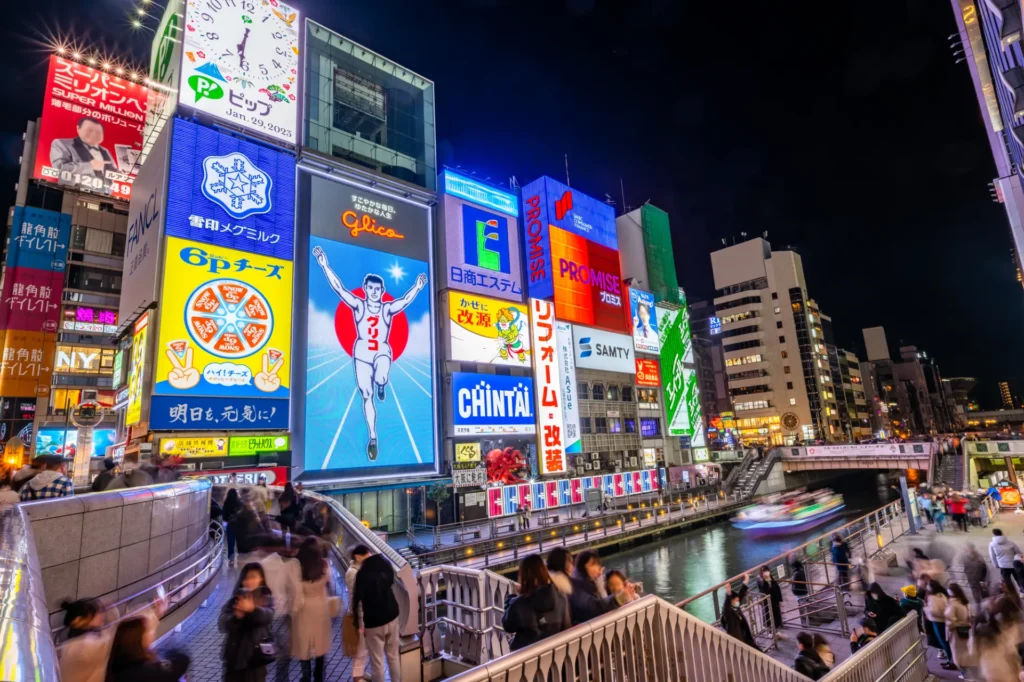
Osaka, Japan’s third-largest city, is the country’s undisputed capital of food, nightlife, and unfiltered urban energy. Known as Kuidaore — “eat until you drop” — Osaka has a culinary culture so distinctive it has earned its own national identity. Beyond the food, the city offers a world-class castle, vibrant entertainment districts, and a warmth of character that sets it apart from Tokyo.
This guide covers everything a first-time foreign visitor needs to know — how to get there, where to go, what to eat, and how to navigate the city efficiently.
CONTENTS
- How to Get to Osaka from Tokyo
- Top Sightseeing Spots in Osaka
- What to Eat in Osaka|The Ultimate Street Food Guide
- Best Time to Visit Osaka
- Getting Around Osaka
- Wi-Fi, eSIM & Staying Connected
- Summary|Preparing for Your Osaka Trip
How to Get to Osaka from Tokyo
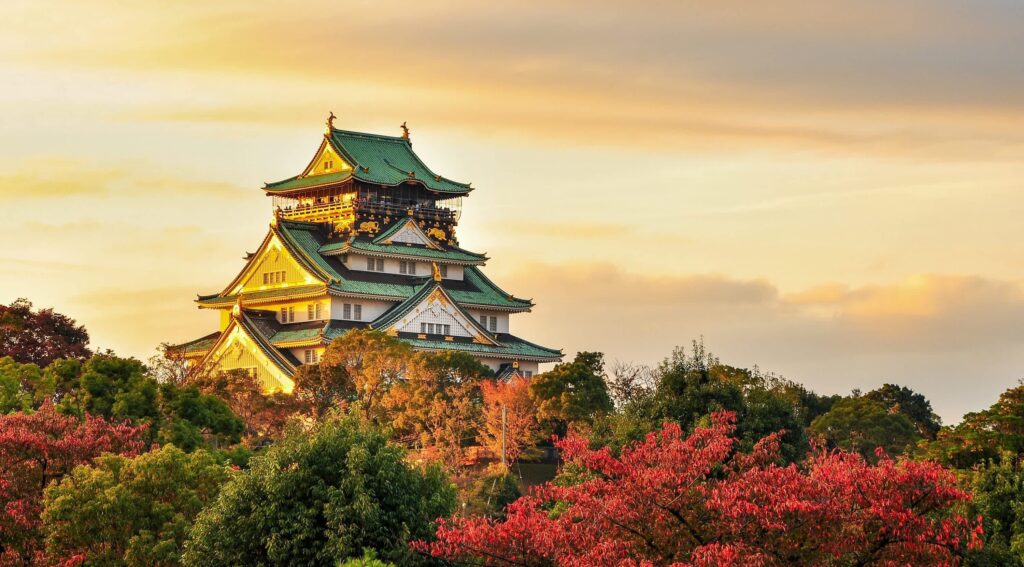
Osaka is served by the Tokaido–Sanyo Shinkansen from Tokyo, making it one of the fastest and most convenient long-distance routes in Japan.
Shinkansen (Recommended)
The Nozomi reaches Shin-Osaka Station from Tokyo Station in approximately 2 hours 30 minutes. The Hikari (JR Pass-compatible) takes approximately 3 hours. From Shin-Osaka, the Midosuji Subway Line connects to central Osaka (Umeda/Namba) in 10–15 minutes. The one-way unreserved fare on Nozomi is approximately ¥13,870.
Budget Alternative: Night Bus or Airplane
For budget travelers, highway night buses from Tokyo to Osaka cost ¥3,000–¥6,000 one way and take approximately 8–9 hours overnight. Domestic flights (Tokyo Haneda to Osaka Itami) take about 70 minutes and can be competitively priced when booked in advance via LCC carriers.
Top Sightseeing Spots in Osaka
1. Dotonbori
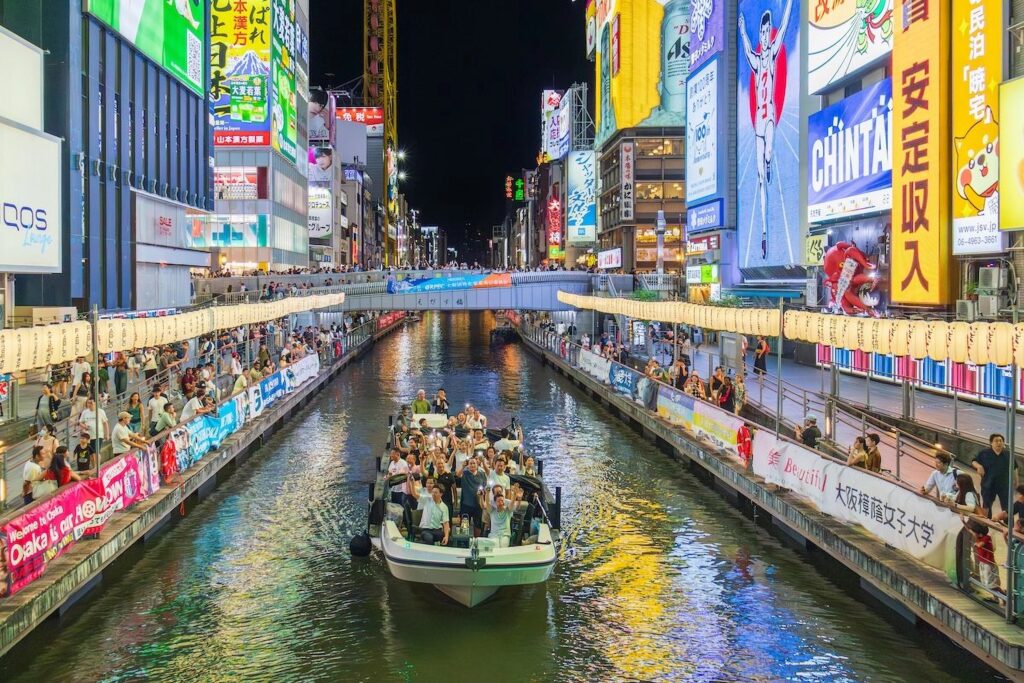
Dotonbori is Osaka’s iconic entertainment and dining district — a canal-side stretch blazing with neon signs, oversized restaurant mascots, and the constant energy of one of Asia’s most vibrant street food scenes. The Glico Running Man illuminated billboard is the city’s defining image and an essential photo stop. The area is at its best after dark when the neon reflects on the canal. Dotonbori is a 5-minute walk from Namba Station.
2. Osaka Castle
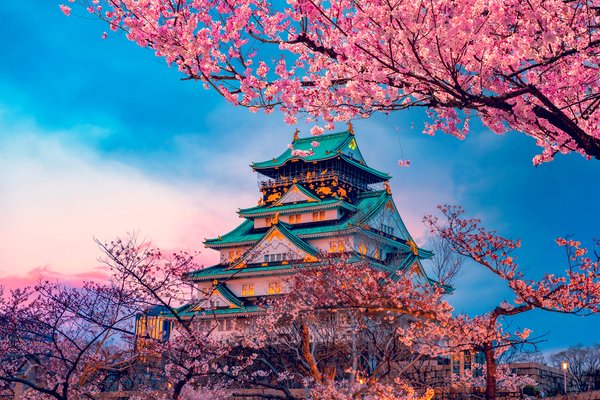
Osaka Castle is one of Japan’s most recognized landmarks, originally built by Toyotomi Hideyoshi in 1583. The current main tower (reconstructed 1931) houses a detailed museum across eight floors documenting the castle’s history and the Sengoku period. The castle park surrounding it is also famous for cherry blossoms in spring, with approximately 600 trees. Admission to the tower is ¥600; the park grounds are free.
3. Shinsekai & Tsutenkaku Tower
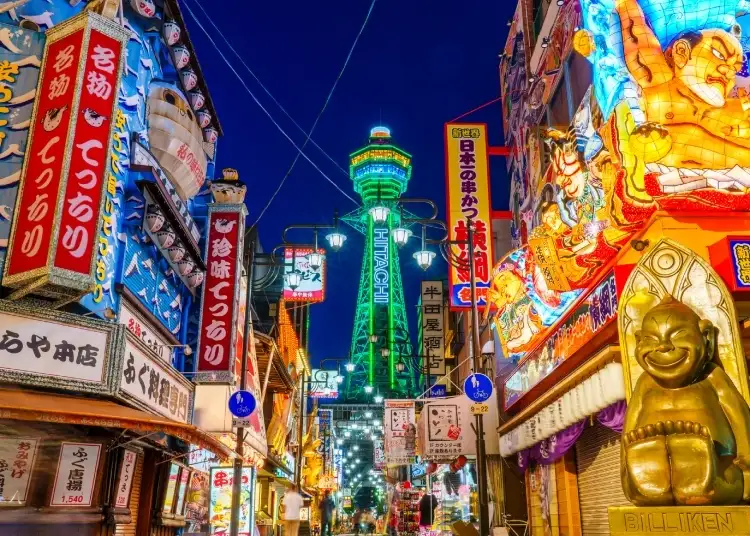
Shinsekai (“New World”) is one of Osaka’s most atmospheric and photogenic neighborhoods — a retro entertainment district built in 1912, now famous for its kushikatsu (deep-fried skewers) restaurants, vintage signage, and relaxed local character. The Tsutenkaku Tower at its center offers city views and functions as the neighborhood’s unofficial mascot. A visit here is one of Osaka’s most distinctly local experiences.
What to Eat in Osaka|The Ultimate Street Food Guide


No city in Japan — and arguably in all of Asia — has a food culture as intense and democratic as Osaka’s. The city’s philosophy of kuidaore (“eat until you drop”) is not a marketing slogan; it is a deeply held civic value. First-time visitors should budget generously for food.
Takoyaki— round, batter-filled balls with octopus, green onion, and tenkasu, topped with sauce and bonito flakes — is Osaka’s signature street food. The best versions are found at specialist shops like Wanaka (Dotonbori) and Kukuru. A portion of 6–8 pieces costs approximately ¥500–¥700.
Okonomiyaki is a savory Japanese pancake made with cabbage, pork, seafood, and egg, topped with okonomiyaki sauce and Japanese mayo. Osaka-style (mixed batter) differs from Hiroshima-style (layered). Expect to pay ¥800–¥1,500 per serving.
Kushikatsu— skewered and deep-fried meat, vegetables, and seafood — is the specialty of the Shinsekai district. The golden rule: never double-dip in the shared sauce. Budget approximately ¥1,500–¥2,500 for a satisfying kushikatsu lunch.
Namba and Dotonbori are the epicenters of street food, but the Kuromon Ichiba Market near Namba is the best destination for fresh seafood, produce, and prepared foods at market prices.
Best Time to Visit Osaka
Osaka is a year-round destination with a distinct appeal in every season, though temperature and humidity should factor into planning.
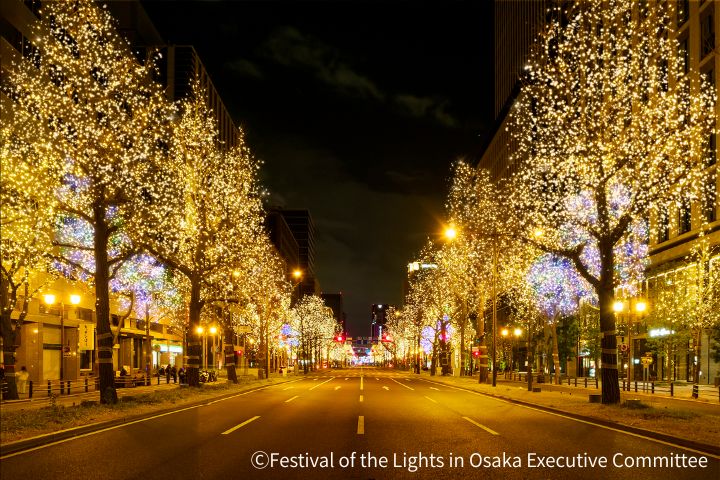
Spring (late March–April) is the most popular season, with cherry blossoms peaking around late March to early April at Osaka Castle Park and the Mint Bureau’s famous rose and cherry blossom corridor. Accommodation prices rise significantly — book 2–3 months in advance.
Autumn (October–November) offers pleasant temperatures (15–22°C), lower accommodation prices than spring, and vibrant foliage at parks and temple gardens. This is one of the best times to visit for a balance of weather, scenery, and value.
Summer (July–August) is hot and humid (often 33–36°C), but Osaka’s summer festivals — including the spectacular Tenjin Matsuri (July 24–25), one of Japan’s three great festivals — are worth the heat for cultural travelers.
Winter (December–February) is mild by Japanese standards (5–10°C), relatively uncrowded, and offers the lowest accommodation prices of the year. Osaka’s food culture is fully active year-round, making winter a surprisingly enjoyable time to visit.
Getting Around Osaka
Osaka has one of Japan’s most user-friendly urban transit systems for foreign visitors. English signage is comprehensive and IC cards are universally accepted.
The Osaka Metro (subway) network has 9 lines covering the entire city. The Midosuji Line (red) is the most essential, running north–south from Shin-Osaka through Umeda, Shinsaibashi, Namba, and beyond. A single ride costs ¥180–¥370 depending on distance.
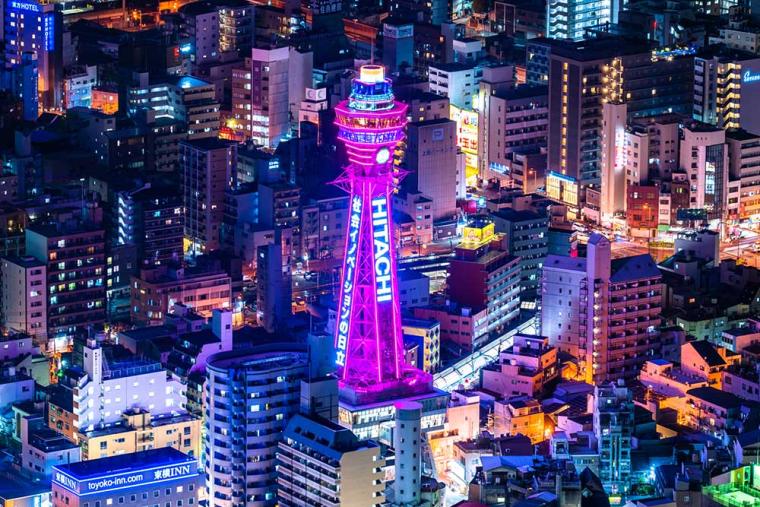
The Osaka Amazing Pass (1-day ¥2,800, 2-day ¥3,600) provides unlimited metro rides plus free entry to approximately 40 attractions including Osaka Castle, Tsutenkaku, and the Tempozan Ferris Wheel — excellent value for a full day of sightseeing.
IC cards (Suica, ICOCA) work on all metro, JR, and private rail lines in Osaka and are the most convenient payment method for transport.
Wi-Fi, eSIM & Staying Connected in Osaka
As one of Japan’s major urban centers, Osaka has excellent mobile network coverage across all districts. However, as with all of Japan, reliance on free Wi-Fi alone is not recommended.
We recommend activating an eSIM service such as Ubigi before departure. Coverage in Osaka’s entertainment districts, underground shopping arcades, and transit hubs is generally strong. An eSIM eliminates the need to carry a separate pocket Wi-Fi device and activates immediately upon arrival.
Free Wi-Fi is available at Shin-Osaka Station, Namba Station, Dotonbori, and most hotel lobbies, but connection quality varies significantly. For navigating Osaka’s dense street food areas and shopping arcades, a personal data connection is strongly recommended.
Summary|Preparing for Your Osaka Trip
Osaka is one of the most immediately enjoyable cities in Japan — welcoming, loud, delicious, and relentlessly entertaining. Unlike Kyoto, it requires very little cultural preparation; the city’s greatest pleasures are found on the streets, at the food stalls, and in the casual izakayas of Namba and Shinsekai.
Plan for more food spending than you expect, carry IC card for transport, and allow at least one full evening in Dotonbori after dark. A 2-night minimum is recommended; 3 nights allows for a day trip to Nara or Kobe.
Review this guide before departure to check festival dates, confirm transport pass options, and ensure your cash reserves are sufficient for Osaka’s famously affordable but predominantly cash-dependent street food scene.

コメント