
Source: Ecotopia
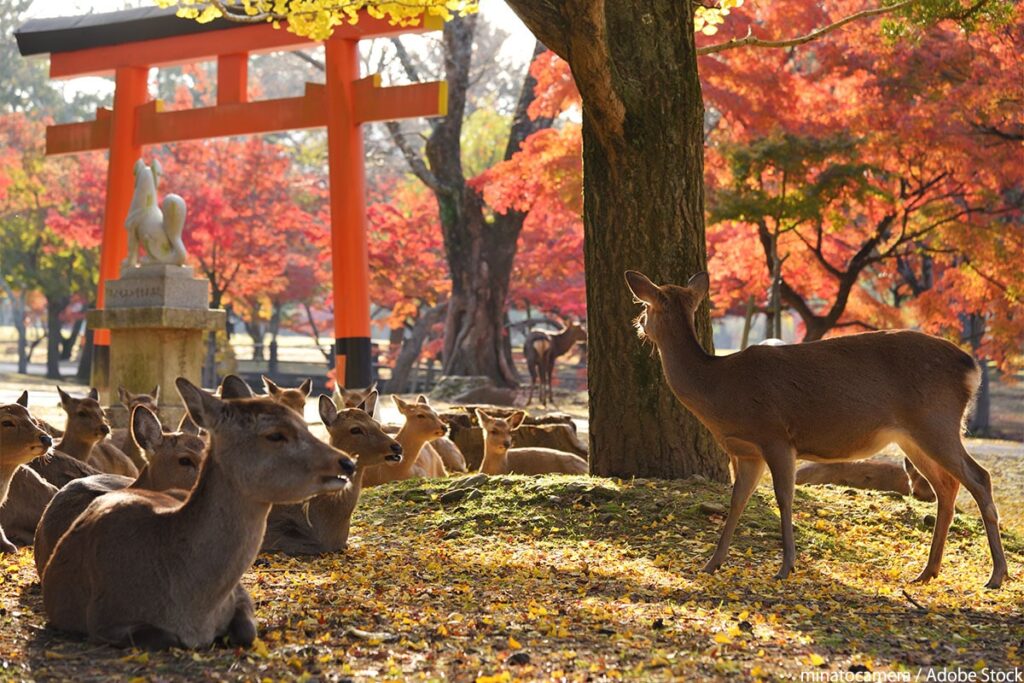
Nara, Japan’s first permanent capital (710–784 AD), is a compact and profoundly ancient city that rewards visitors with some of the country’s oldest and most impressive Buddhist monuments — and the unique experience of interacting with over 1,200 wild deer that roam freely through the park at the city’s heart. The deer are considered sacred messengers of the Shinto gods and are remarkably tame.
Most visitors come to Nara as a day trip from Kyoto or Osaka, but the city’s depth rewards those who stay longer. This guide covers everything you need for a memorable visit.
CONTENTS
- How to Get to Nara from Kyoto or Osaka
- Top Sightseeing Spots in Nara
- What to Eat in Nara|Kakinoha Sushi & Mochi
- Best Time to Visit Nara
- Wi-Fi, eSIM & Staying Connected
- Summary|Planning Your Nara Visit
How to Get to Nara from Kyoto or Osaka
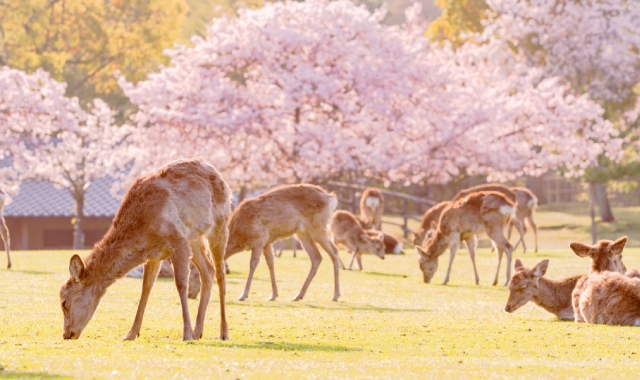
Nara is exceptionally well-connected by rail from both Kyoto and Osaka, making it one of the easiest day trips in the Kansai region.
From Kyoto
The fastest option is the Kintetsu Kyoto Line from Kintetsu-Kyoto Station (adjacent to JR Kyoto Station) to Kintetsu Nara Station — approximately 35 minutes on the limited express (¥760) or 45 minutes on the express (¥560). Trains depart every 30–60 minutes. Kintetsu Nara Station is closer to Nara Park than JR Nara Station, making it the preferred arrival point.
From Osaka (Namba)
The Kintetsu Osaka Line from Osaka Namba to Kintetsu Nara Station takes approximately 45 minutes on the limited express (¥1,130). JR trains are also available from Osaka Station via the Yamatoji Line (approx. 60 minutes to JR Nara, ¥780).
JR Pass holders can use the JR Nara Line from Kyoto (approx. 45 minutes) or the Yamatoji Line from Osaka at no extra cost. Note that JR Nara Station requires a 20-minute walk or short bus ride to reach Nara Park and the main temples.
Top Sightseeing Spots in Nara
1. Todai-ji & the Great Buddha
Source: Japan Guide
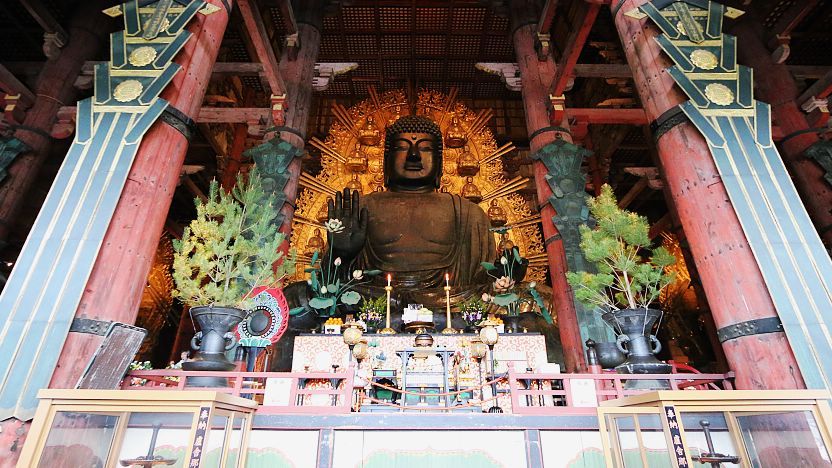
Todai-ji is Japan’s most impressive Buddhist temple complex and a UNESCO World Heritage Site. The Great Buddha Hall (Daibutsuden) is the world’s largest wooden building, housing a 15-meter bronze Buddha (Daibutsu) cast in 752 AD — one of Japan’s greatest artistic achievements. A famous wooden pillar inside the hall has a small square hole at its base — legend says that those who can squeeze through it will be granted enlightenment (a popular activity for children and adventurous adults). Admission is ¥600 for adults.
2. The Sacred Deer of Nara Park
Source: Nara City Tourism Association
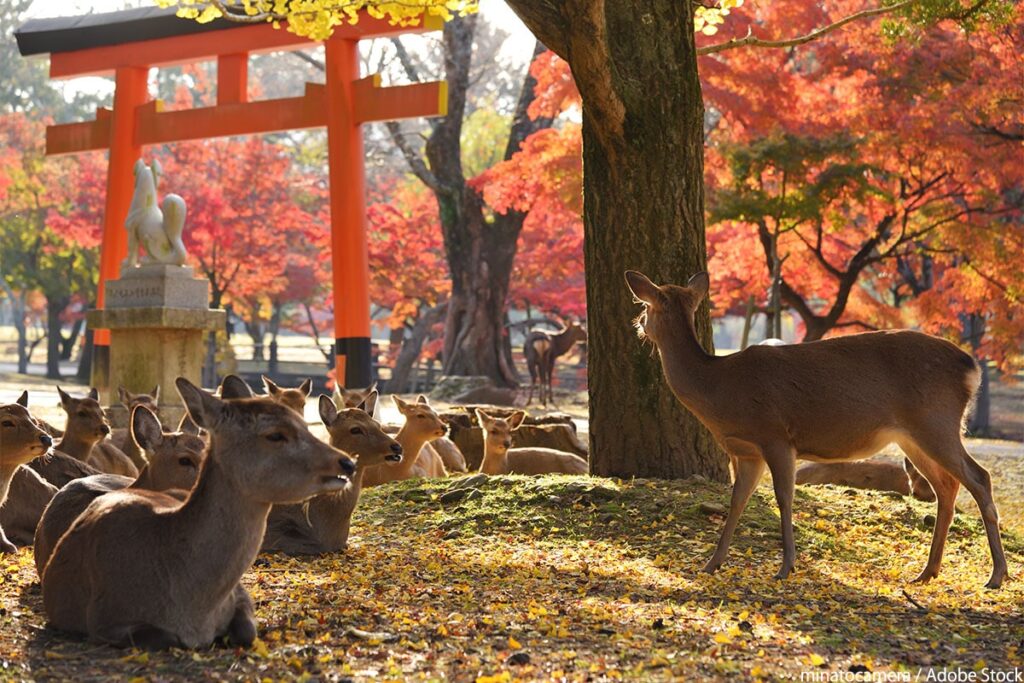
Over 1,200 sika deer roam freely throughout Nara Park and the surrounding areas, including temple precincts and streets. They are federally designated as Natural Treasures and have been associated with Kasuga Taisha Shrine since the 8th century. The deer are accustomed to humans and can be fed shika senbei (deer crackers), sold by vendors throughout the park for ¥200 per pack. They bow their heads when they want food — a behavior they have learned from human interaction over generations. Keep food out of visible reach to avoid being surrounded — they can be insistent.
3. Kasuga Taisha Shrine
Kasuga Taisha is Nara’s most important Shinto shrine, founded in 768 AD and a UNESCO World Heritage Site. The approach through forested pathways lined with over 3,000 stone and bronze lanterns creates one of Japan’s most atmospheric walks. The lanterns are lit twice yearly during the Mantoro lantern festivals (early February and mid-August), when the entire shrine glows in candlelight. Admission to the inner shrine is ¥500; the approach and outer areas are free.
4. Naramachi Historic District
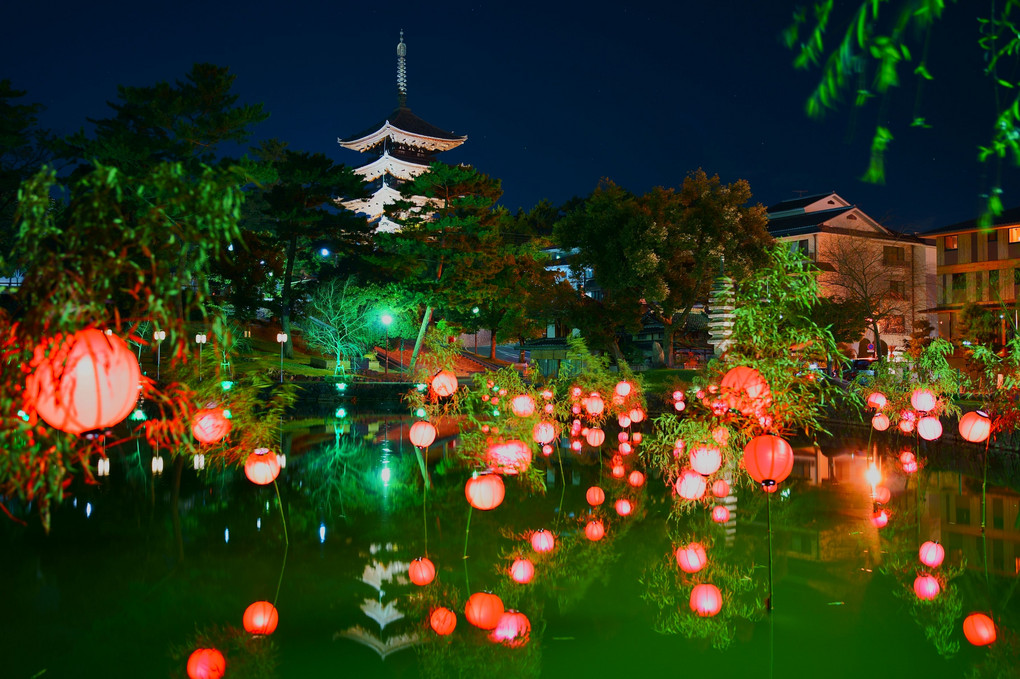
Naramachi is a preserved merchant quarter south of Nara Park, with rows of well-maintained Edo-period machiya townhouses now housing traditional crafts shops, cafes, sake breweries, and small galleries. It offers a quieter, more intimate Nara experience away from the main temple crowds and is ideal for a relaxed afternoon stroll. Entry is free.
What to Eat in Nara|Kakinoha Sushi & Mochi
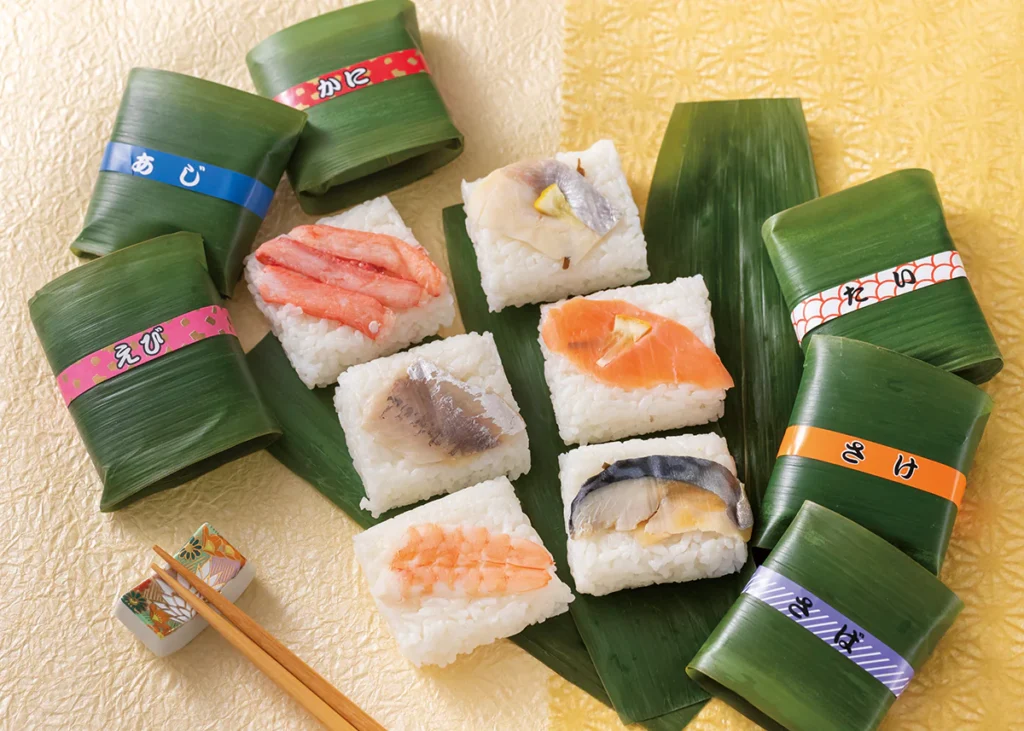
Nara’s cuisine is distinctive and rooted in its historical Buddhist culture. The city’s most celebrated local foods reflect centuries of tradition.
Kakinoha-zushi is Nara’s signature dish — mackerel or salmon sushi pressed into rice and wrapped in a preserved persimmon leaf. The leaf imparts a subtle, tannic aroma to the rice and acts as a natural preservative. This preparation style dates to the Edo period when fresh fish was transported from the coast to landlocked Nara. Available at specialist shops throughout the city and at Kintetsu and JR Nara stations; expect to pay ¥200–¥400 per piece.
Nakatanidou mochi — the most theatrical food experience in Nara — involves watching staff pound freshly made mochi by hand at extraordinary speed in front of their shop near Higashimuki Shopping Street. The resulting yomogi mochi (mugwort flavored) sells out daily. Queues form but move quickly.
Miwa somen is one of Japan’s oldest noodle traditions, originating in the Miwa area of Nara Prefecture. Thin, delicate wheat noodles served cold with dipping broth are available at restaurants throughout the city, particularly in the Naramachi district.
Best Time to Visit Nara
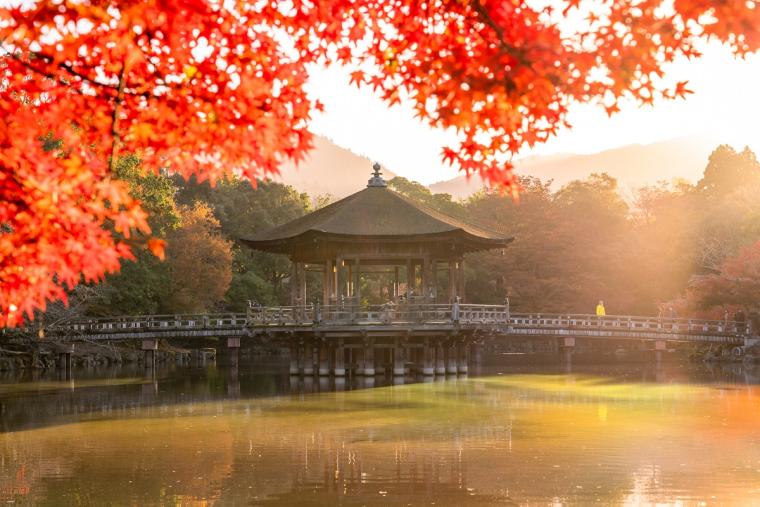
Nara is a year-round destination — the deer are present in all seasons — but the following seasonal differences are worth considering for planning purposes.
Spring (late March–April) brings cherry blossoms throughout Nara Park and the temple grounds, creating extraordinary compositions with the deer and ancient buildings. This is peak season — arrive early and expect significant crowds at Todai-ji by midday.
Autumn (October–November) is arguably the finest season, with crimson and golden foliage throughout the park and the added drama of the deer antler cutting ceremony (Shika no Tsunokiri), held in October — a traditional ceremony with over 300 years of history.
Summer (July–August) is hot and can be very crowded, particularly during Golden Week and the Obon period. The Nara Tokae lantern festival in August is highly atmospheric.
Winter (December–February) brings occasional snow that transforms the park and temple rooftops into one of Japan’s most serene winter landscapes. Crowds are minimal and accommodation is at annual lows.
Wi-Fi, eSIM & Staying Connected in Nara
Nara Park and the central temple district have reasonable mobile coverage, though signal can be intermittent in the more forested areas near Kasuga Taisha. The Naramachi district is well covered.
We recommend activating an eSIM service such as Ubigi before arriving in Japan. For Nara specifically, a data connection is helpful for checking bus schedules, temple opening hours, and navigating between the more spread-out sites around Kasuga Taisha and the Nara Hills walking trails.
Summary|Planning Your Nara Visit
Nara is Japan at its most ancient and most approachable — a city where 1,300 years of Buddhist and Shinto heritage coexists with freely roaming deer, excellent food, and a human scale that makes it feel intimate rather than overwhelming.
Most visitors come for a half-day or full day, but an overnight stay allows you to experience the park in early morning and evening light, when the deer thin the crowds and the temples take on a meditative quality. Combine Nara with Kyoto and Osaka for a classic Kansai itinerary.
Carry deer crackers, wear comfortable shoes for the park, bring cash for smaller food stalls, and plan to arrive at Todai-ji before 9:30 AM to beat the tour groups.

コメント