
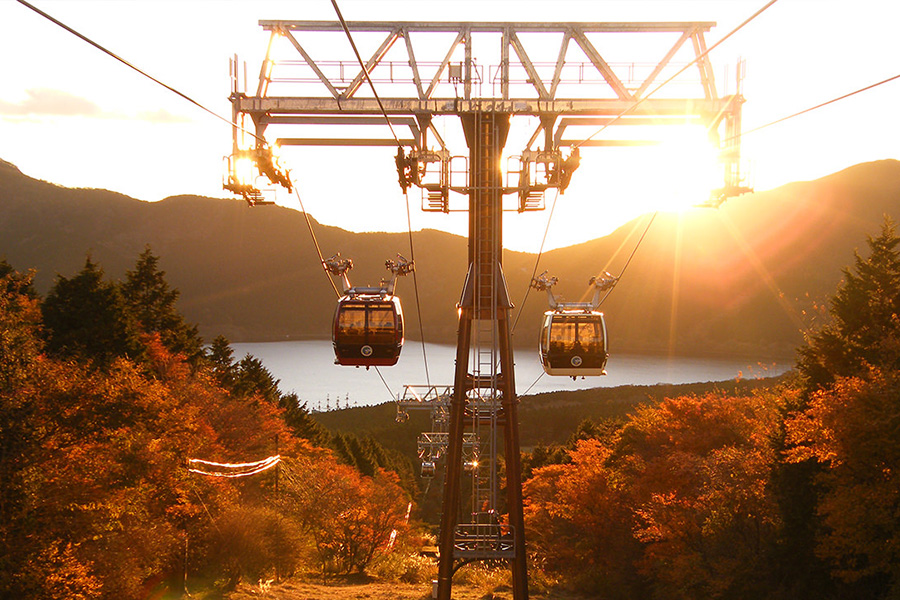
Source: Hoshino Resorts
Hakone, located in Kanagawa Prefecture just 80 kilometers west of Tokyo, is Japan’s most popular short-trip destination for both domestic and international visitors. The area offers a rare combination of iconic Mount Fuji views, high-quality hot spring resorts, world-class contemporary art, and a scenic transport loop connecting lakes, ropeways, and mountain railways — all within a 90-minute radius of central Tokyo.
This guide covers everything a first-time foreign visitor needs to know to plan a perfect Hakone day trip or overnight stay.
CONTENTS
- How to Get to Hakone from Tokyo
- The Hakone Free Pass — Essential for Visitors
- Top Sightseeing Spots in Hakone
- Hot Springs (Onsen) in Hakone
- Tips for Seeing Mount Fuji from Hakone
- Wi-Fi, eSIM & Staying Connected
- Summary|Planning Your Hakone Trip
How to Get to Hakone from Tokyo
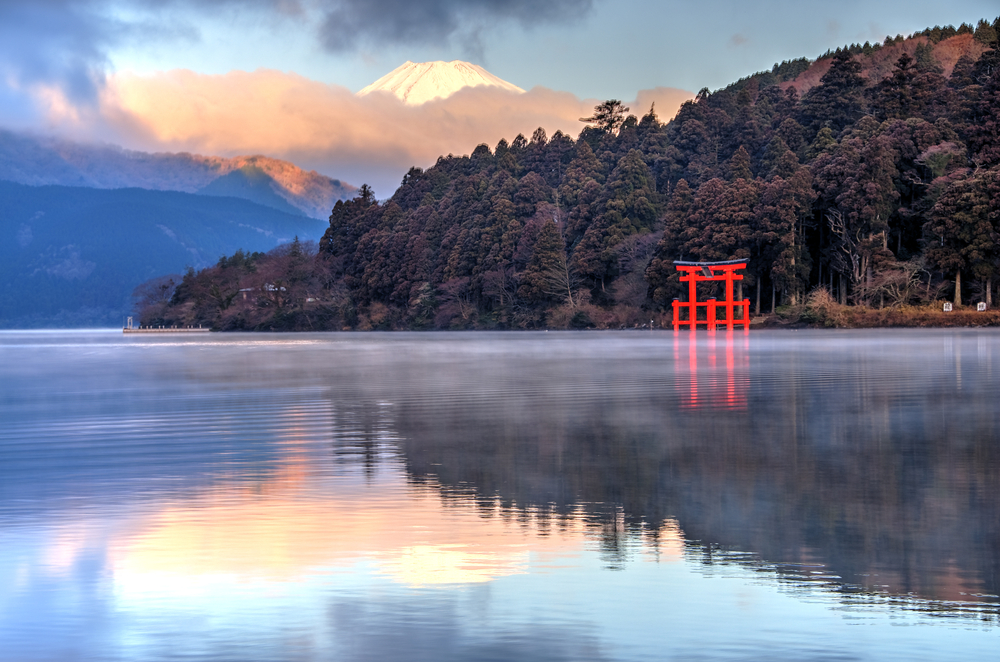
Hakone is one of the most accessible mountain resort areas from Tokyo, with multiple transport options depending on budget and convenience preferences.
Option 1: Odakyu Romance Car from Shinjuku (Recommended)
The Odakyu Romance Car (limited express) runs directly from Shinjuku Station to Hakone-Yumoto Station in approximately 85 minutes without transfers. Seats are spacious and reserved, making it the most comfortable option. The fare is approximately ¥2,340 (including limited express supplement). Departure frequency is roughly every 30–60 minutes.
Option 2: JR Shinkansen to Odawara
Take the Tokaido Shinkansen (Kodama) from Tokyo Station to Odawara Station (approx. 35 minutes, ¥3,760), then transfer to the Hakone Tozan Railway to Hakone-Yumoto (15 minutes). This is the fastest option from Tokyo Station and is partly covered by the JR Pass to Odawara.
The Hakone Free Pass — Essential for Visitors
The Hakone Free Pass (¥6,000 for 2 days from Shinjuku, ¥5,000 from Odawara) is the single most important item to purchase for a Hakone visit. It provides unlimited use of the Hakone Tozan Railway, Hakone Tozan Bus, Hakone Ropeway, Lake Ashi sightseeing boats, Hakone Tozan Cable Car, and the Odakyu Hakone Highway Bus — essentially all transportation within the Hakone loop circuit.
The pass also includes discounts at over 50 facilities including the Hakone Open-Air Museum, Hakone Checkpoint Museum, and various onsen facilities. For any visitor spending a full day or more in Hakone, the pass more than pays for itself within the first 3–4 transport uses. It is available at Odakyu ticket counters at Shinjuku Station and major stations along the Odakyu Line.
Top Sightseeing Spots in Hakone
1. Owakudani Volcanic Valley
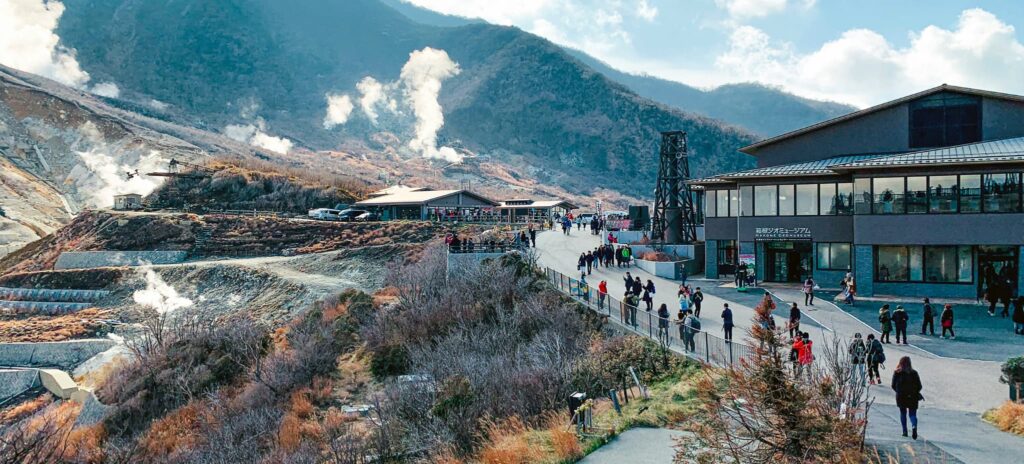
Owakudani (“Great Boiling Valley”) is an active volcanic zone on the Hakone Ropeway, featuring dramatic steaming vents, sulphur deposits, and the famous kuro-tamago — eggs hard-boiled in the volcanic hot springs, which turn the shells black. The ropeway station at Owakudani sits at 1,044 meters and offers one of the clearest views of Mount Fuji on sunny days. Note that the ropeway section over Owakudani is occasionally closed due to volcanic activity — check conditions before visiting.
2. Lake Ashi & Pirate Ship Cruise
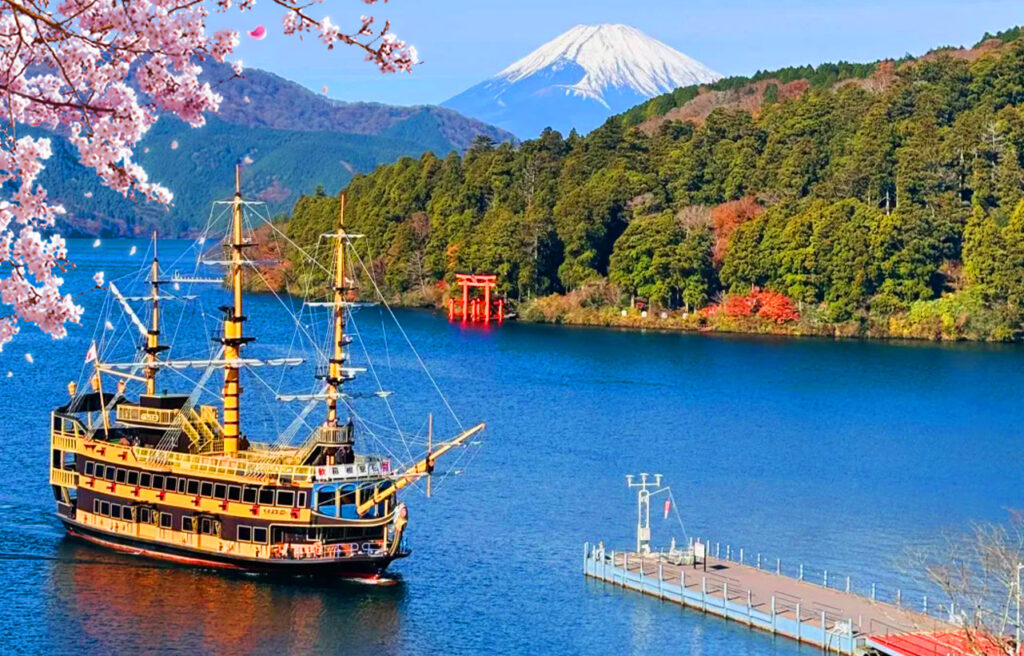
Lake Ashi (Ashinoko) is a scenic crater lake in the heart of Hakone, offering the classic view of a vermilion torii gate framed against Mount Fuji across the water. The Hakone Pirate Ship (sightseeing cruise) crosses the lake between Togendai, Hakone-machi, and Moto-Hakone in approximately 30 minutes. Covered by the Hakone Free Pass. The lakeside Moto-Hakone area is also the starting point for a historic cedar-lined avenue of the old Tokaido highway.
3. Hakone Open-Air Museum
Source: 360Cities
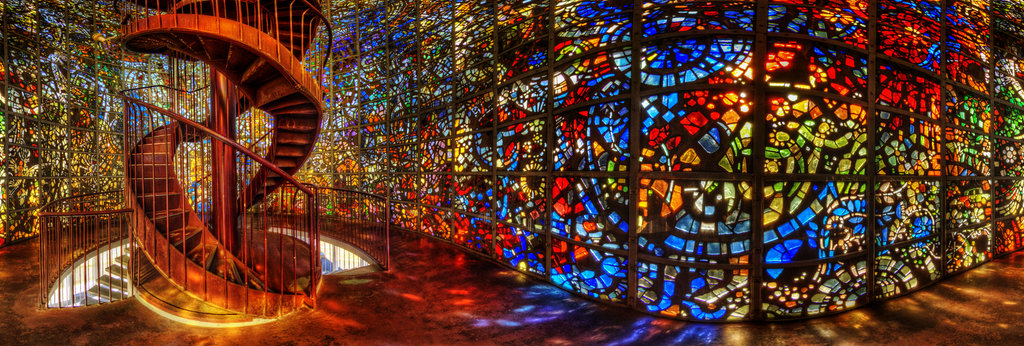
The Hakone Open-Air Museum is Japan’s first and finest open-air sculpture museum, set across 7 hectares with over 120 works by Picasso, Rodin, Henry Moore, and leading Japanese sculptors, displayed amid the Hakone mountains. The Picasso Pavilion alone houses over 300 original Picasso works. The combined experience of world-class art and mountain scenery is genuinely extraordinary. Admission is ¥1,600 for adults; discounted with the Hakone Free Pass.
Hot Springs (Onsen) in Hakone
Source: Yukoyuko
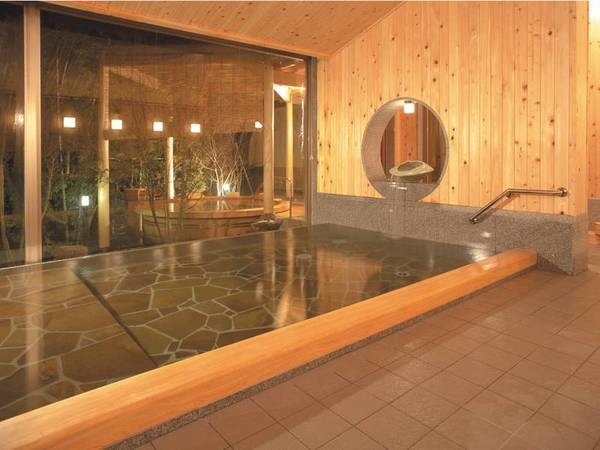
Hakone is one of Japan’s most celebrated onsen destinations, with hot spring sources spread across the entire area — Hakone-Yumoto, Miyanoshita, Kowakidani, Gora, and Sengokuhara each have their own distinctive spring water characteristics.
For those staying overnight, a ryokan (traditional Japanese inn) with in-house onsen is the definitive Hakone experience. High-end ryokan in Gora and Miyanoshita include kaiseki dinner and breakfast and start at approximately ¥30,000–¥50,000 per person. Mid-range options in Hakone-Yumoto start at approximately ¥15,000–¥20,000 per person with two meals.
For day visitors, several day-use onsen facilities along the Hakone circuit offer bathing without an overnight stay for ¥1,000–¥2,500. Tenzan Tohji-kyo near Hakone-Yumoto and Yunessun Spa Resort in Kowakidani are popular options for visitors without ryokan reservations.
Tips for Seeing Mount Fuji from Hakone
Source: Tokyo Cheapo
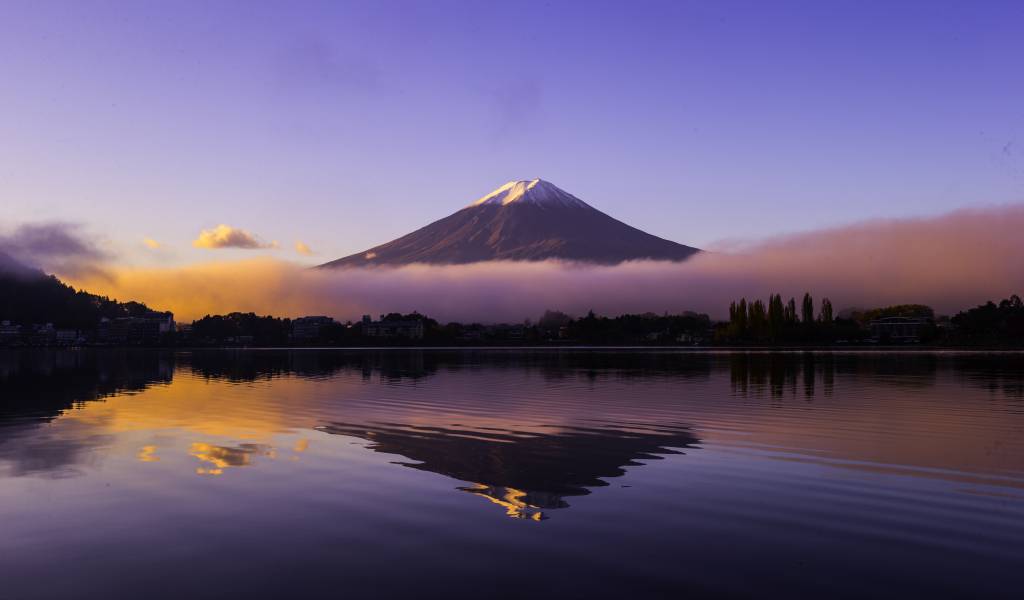
Seeing Mount Fuji clearly from Hakone is one of the most sought-after experiences in Japan — and one of the most unpredictable. Managing expectations in advance significantly improves the overall Hakone experience.
Mount Fuji is most likely to be visible in winter (December–February), when cold, dry air provides maximum clarity. Summer and rainy season (June–July) offer the lowest visibility rates. Even in clear seasons, the mountain is typically shrouded by cloud by mid-morning — plan to be at viewpoints (Owakudani, Lake Ashi shoreline, the ropeway) before 10:00 AM for the best chances.
If Fuji is not visible during your visit, the rest of the Hakone circuit — the ropeway, art museum, onsen, and lake — is outstanding regardless of mountain visibility. Do not make Fuji visibility the sole criterion for a Hakone trip.
Wi-Fi, eSIM & Staying Connected in Hakone
Mobile coverage in Hakone’s main visitor areas — Hakone-Yumoto, Gora, Owakudani, and Lake Ashi shores — is generally reliable. Signal can be intermittent on remote mountain trails and in certain ropeway sections.
We recommend activating an eSIM service such as Ubigi before departing Tokyo. A data connection is particularly useful for monitoring Mount Fuji weather webcams in real time to assess visibility before committing to ropeway or lakeside viewpoints. Download Google Maps offline data for the Hakone area before departing your Tokyo hotel.
Summary|Planning Your Hakone Trip
Hakone is one of Japan’s most consistently rewarding short trips — accessible, scenic, and rich in both natural and cultural attractions. Whether you come for a single day or an overnight ryokan stay, the experience is excellent in any season.
Purchase the Hakone Free Pass before boarding your train from Shinjuku or Odawara. Arrive early for the best Fuji visibility and the least crowded ropeway queues. Carry cash for smaller restaurants and onsen facilities. And plan to stay overnight at least once — the difference between a day trip and a ryokan stay is the difference between seeing Hakone and truly experiencing it.

コメント