
Information source: VELTRA
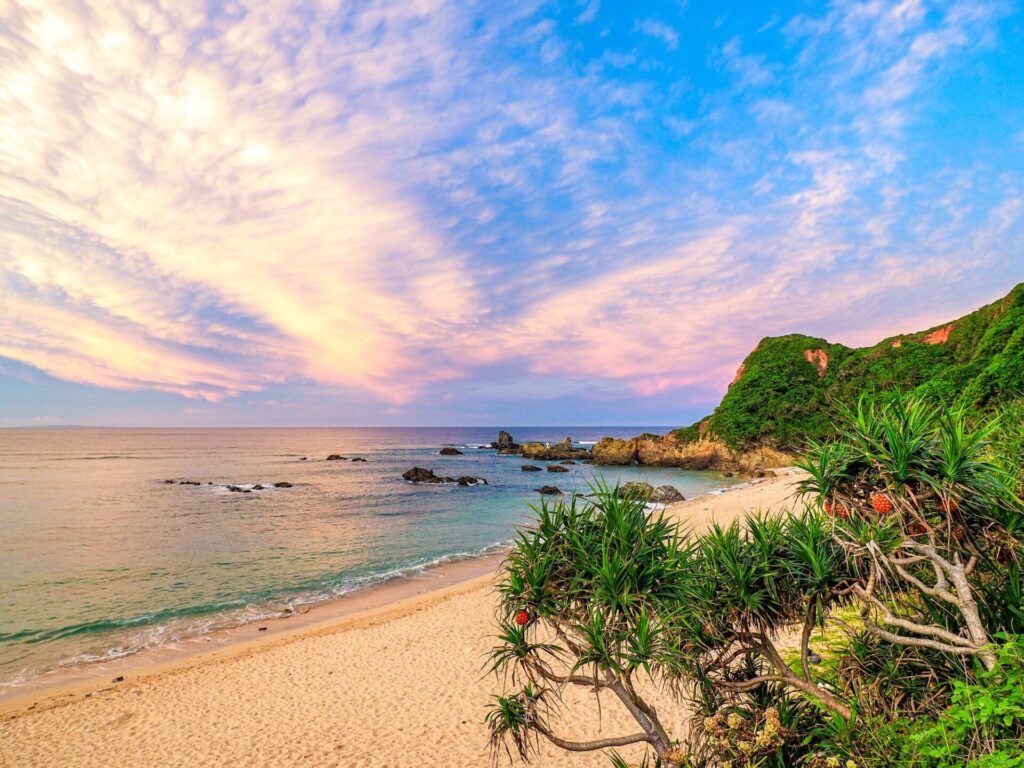
Okinawa, Japan‘s southernmost prefecture, is unlike anywhere else in the country. A sub-tropical archipelago of 160 islands stretching toward Taiwan, Okinawa offers turquoise water and white-sand beaches rivaling Southeast Asia, some of Japan’s finest coral reef diving, a distinct Ryukyu Kingdom cultural heritage, and a cuisine and musical tradition entirely its own.
For international visitors, Okinawa represents Japan’s beach destination — accessible, warm year-round, and combining natural beauty with a fascinating history of independence, occupation, and resilience. This guide covers everything you need for Naha and the main island (Okinawa Honto).
CONTENTS
- How to Get to Okinawa from Tokyo or Osaka
- Top Sightseeing Spots in Okinawa
- Okinawa’s Best Beaches & Diving Spots
- What to Eat in Okinawa|Champuru & Awamori
- Best Time to Visit Okinawa
- Getting Around Okinawa
- Wi-Fi, eSIM & Staying Connected
- Summary|Planning Your Okinawa Trip
How to Get to Okinawa from Tokyo or Osaka
Source: Tripmasters
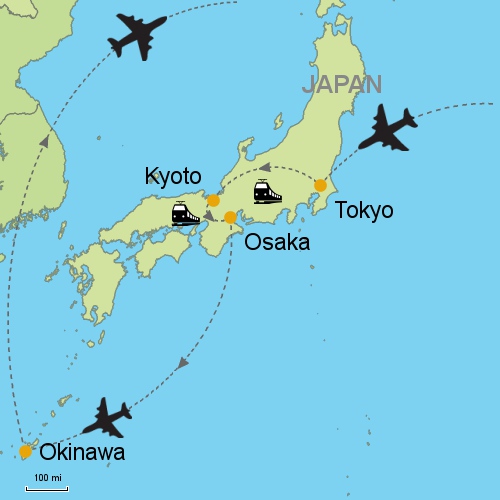
Okinawa is accessible only by air or sea from mainland Japan. Flight is by far the practical choice for most visitors.
By Air (Recommended)
Direct flights operate from Tokyo (Haneda/Narita), Osaka (Kansai/Itami), Nagoya, Fukuoka, Sapporo, and several other cities to Naha Airport (OKA) on the main island. Flight time from Tokyo is approximately 2 hours 30 minutes; from Osaka approximately 2 hours. Fares vary enormously: booking 2–3 months in advance with LCC carriers (Peach, Jetstar Japan, Skymark) can yield fares as low as ¥5,000–¥10,000 one way from Tokyo. Full-service carriers (ANA, JAL) offer flexibility but at higher prices.
Naha Monorail (Yui Rail)
Naha Airport is connected to central Naha and Shuri Castle by the Yui Rail monorail — the only rail transit in Okinawa. The airport to Shuri takes approximately 27 minutes (¥370). A 1-day or 2-day monorail pass (¥800/¥1,400) provides good value for exploring central Naha.
Top Sightseeing Spots in Okinawa
1. Shuri Castle & Ryukyu Kingdom Heritage
Source: Yahoo! JAPAN
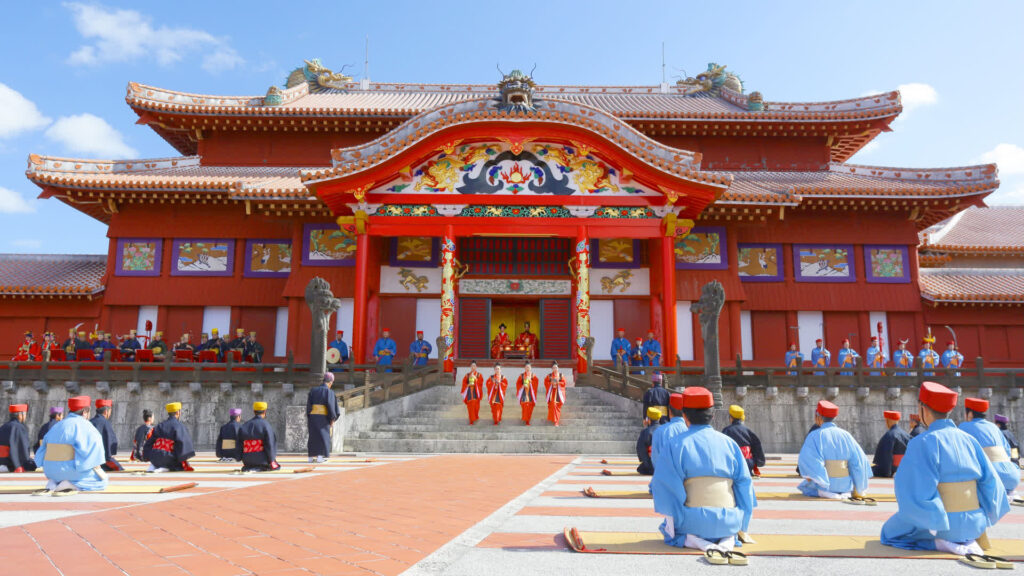
Shuri Castle (首里城) is the UNESCO-listed palace of the former Ryukyu Kingdom, which ruled the Okinawa archipelago as an independent state for several centuries before annexation by Japan in 1879. The castle’s distinctive crimson architecture reflects Chinese, Japanese, and uniquely Ryukyuan influences that set it apart from any other castle in Japan. The main hall (Seiden) was devastated by fire in October 2019 and is currently under reconstruction, with completion expected in 2026. The outer gates, gardens, and surrounding UNESCO heritage sites remain fully accessible. Admission varies by area (approximately ¥400–¥800 for inner areas).
2. Okinawa Churaumi Aquarium

Source: Rurubu
The Okinawa Churaumi Aquarium (美ら海水族館) in northern Okinawa is one of the world’s premier aquarium facilities, housing one of the world’s largest single acrylic viewing panels — the “Kuroshio Sea” tank, which contains three whale sharks and multiple manta rays swimming among thousands of other marine species. The facility is set within Ocean Expo Park, which also features Emerald Beach (considered one of Okinawa’s finest). Admission is ¥2,180 for adults. Access from Naha by bus is approximately 2 hours; a rental car or organized tour is recommended for convenience.
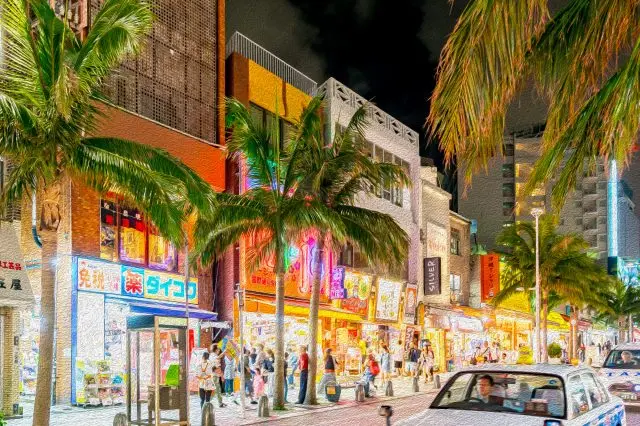
3. Kokusai-dori Street & American Villag
Source: GLT Japan
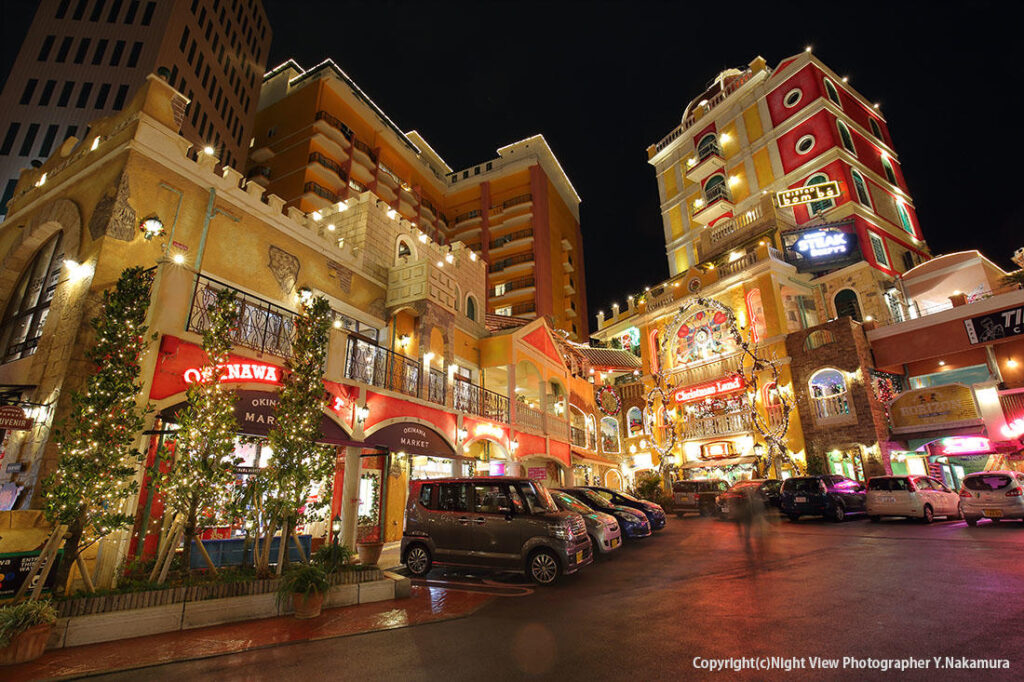
Kokusai-dori (International Street) is Naha’s main shopping and entertainment boulevard, stretching 1.6 kilometers through central Naha and lined with restaurants, souvenir shops, craft markets, and entertainment venues. It is the social heart of Naha and the best base for evening dining and shopping. American Village in Chatan reflects Okinawa’s unique post-war American military heritage — a purpose-built entertainment complex of American-themed restaurants, boutiques, and a Ferris wheel that has become an unlikely tourist attraction in its own right.
Okinawa’s Best Beaches & Diving Spots
Okinawa’s greatest natural asset is its coastline — shallow, turquoise water above white coral sand, with visibility often exceeding 30 meters. The main island’s most accessible beaches are in the central and northern regions.
Source: Okinawa Commemorative National Government Park
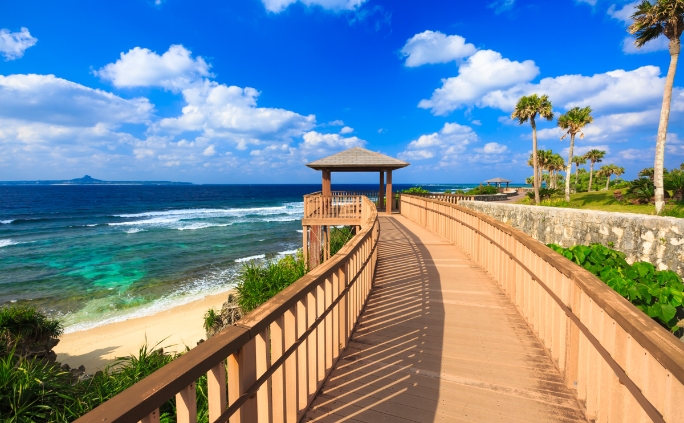
Emerald Beach at Ocean Expo Park in northern Okinawa is consistently rated the island’s finest publicly accessible beach — calm, clear, and maintained to a high standard. Facilities include showers, lifeguards (seasonal), and rental equipment. Entry to the beach is free (park admission applies: ¥740).
Source: Tripadvisor
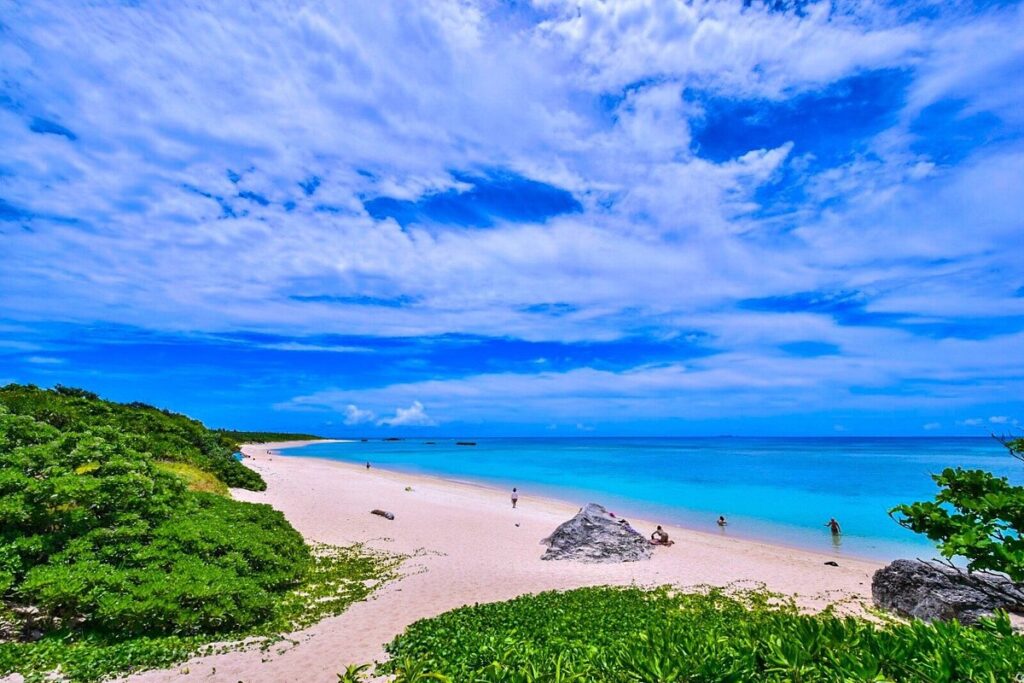
Nishihama Beach on Hateruma Island in the Yaeyama Islands is considered by many to be the most beautiful beach in all of Japan — a remote, near-deserted stretch of brilliant white sand with extraordinary water clarity. It requires a ferry from Ishigaki (itself accessible by air from Naha). For visitors with time to explore the outer islands, it is unmissable.
Source: Visit Okinawa Japan
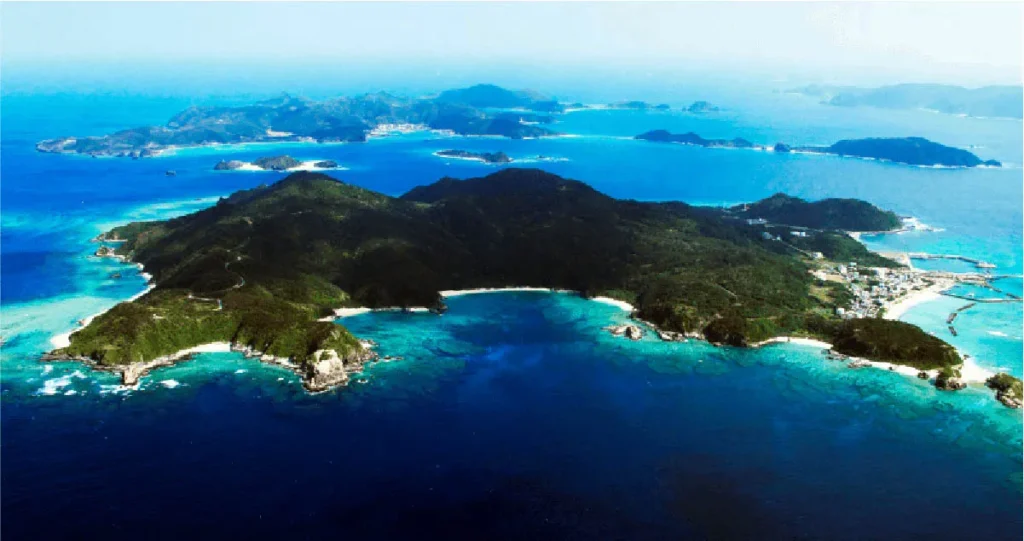
For diving and snorkeling, Okinawa’s coral reefs are among Asia’s finest. Kerama Islands (45 minutes by high-speed ferry from Naha) offer exceptional visibility and diverse marine life including sea turtles and manta rays. Dozens of dive operators in Naha and along the main island’s coast offer guided dives for ¥8,000–¥15,000 including equipment.
What to Eat in Okinawa|Champuru & Awamori
Source: Marunouchi.com
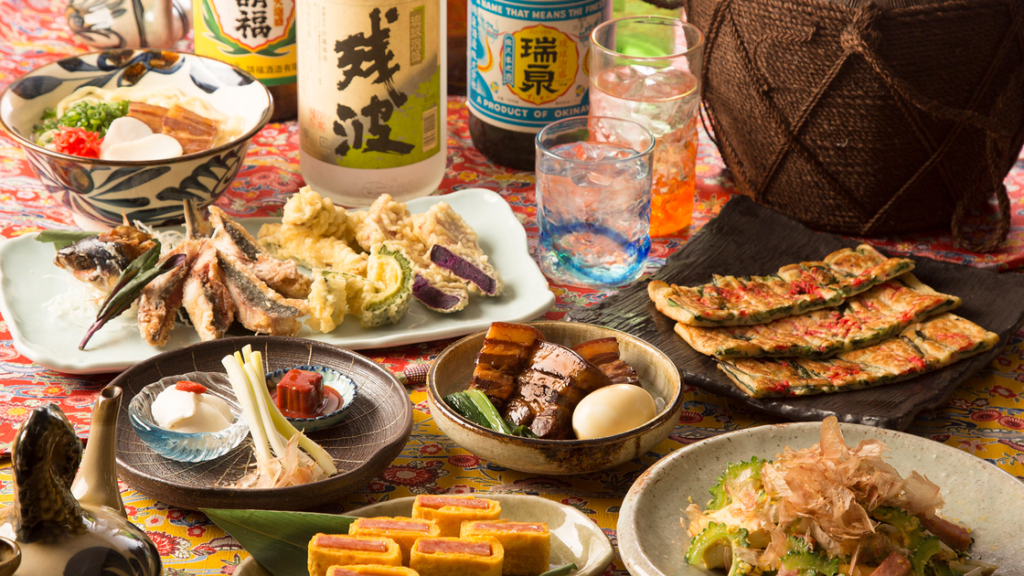
Okinawan cuisine is distinct from mainland Japanese cooking, incorporating influences from China, Southeast Asia, and the centuries of Ryukyu Kingdom trade that shaped island culture.
Goya champuru is Okinawa’s most iconic dish — a stir-fry of bitter melon (goya), tofu, egg, and pork or SPAM, seasoned simply with soy sauce. The bitter melon is an acquired taste for some visitors but is deeply integrated into local food identity. Available at virtually every restaurant on the island, typically ¥600–¥900.
Okinawa soba is not technically soba (buckwheat) but a thick wheat noodle served in a pork-and-bonito broth, topped with braised pork belly (soki), fish cake, and pickled ginger. It is one of Okinawa’s most beloved comfort foods, distinct from any mainland Japanese noodle dish. Prices range from ¥600–¥1,000.
Awamori is Okinawa’s indigenous distilled rice spirit — older and made by a different process than sake or shochu. The best aged awamori (kuusu) is comparable to fine whisky and is a point of local pride. Tasting sets at Kokusai-dori shops range from ¥500–¥1,500.
Best Time to Visit Okinawa
Source: Okinawa Story
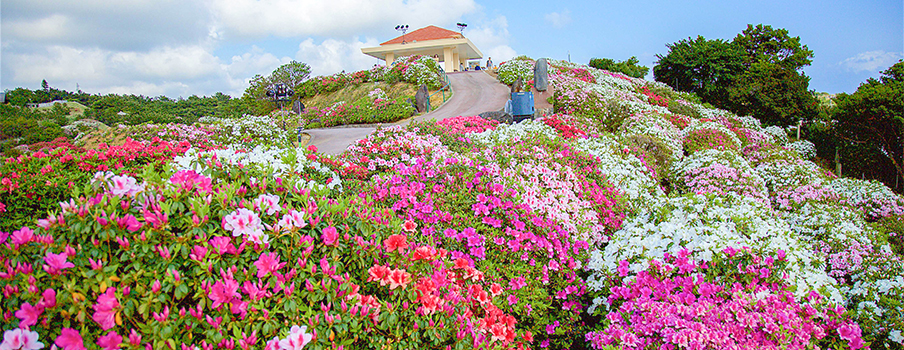
Okinawa’s subtropical climate gives it Japan’s longest beach season and most consistently warm temperatures, but timing affects the experience significantly.
Beach season (May–October) is the primary driver of most visits. Water temperatures are warmest from July through September (27–30°C). The official swimming/lifeguard season is typically May through October at most beaches. Peak summer (July–August) sees high crowds and maximum accommodation prices.
Spring (March–May) — particularly May — is increasingly regarded as the ideal time: water warm enough to swim, cherry blossoms (Okinawa’s Kanhizakura blooms earliest in Japan, in January–February), fewer crowds, and moderate prices. The annual Naha Dragon Boat Race (early May) is a spectacular cultural event.
Typhoon season (July–October) brings a real risk of disruption, particularly in August and September. Have contingency plans if traveling during this period.
Winter (December–March) is warm by mainland standards (15–20°C) and ideal for sightseeing and diving, though too cool for comfortable beach swimming for most visitors. Whale watching (humpback whales in the Kerama Islands) is a winter-season highlight from January through March.
Getting Around Okinawa
Okinawa’s main island has limited public transportation outside of Naha, making a rental car the strongly recommended option for visitors wanting to reach beaches, the aquarium, and the northern and central regions efficiently.
Car rental is available from Naha Airport and central Naha from approximately ¥5,000–¥8,000 per day (compact), plus fuel. An international driving permit (IDP) is required for foreign license holders from most countries — confirm your country’s requirements before travel. Roads are well-maintained and traffic drives on the left.
Within central Naha, the Yui Rail monorail and walking are fully adequate for Kokusai-dori, Shuri Castle, and the main shopping districts. Bus services exist but routes and schedules can be complex — Google Maps has reliable Okinawa bus routing in English.
Wi-Fi, eSIM & Staying Connected in Okinawa
Mobile coverage on Okinawa’s main island is generally strong in urban and coastal resort areas. Signal can be limited in the more remote northern (Yanbaru) forest areas and on smaller outer islands.
We recommend activating an eSIM service such as Ubigi before arriving in Japan. For Okinawa specifically, a data connection is critical for navigating by rental car, checking beach conditions and jellyfish advisories, and coordinating ferry schedules to the outer islands. Download Google Maps offline data for both the main island and any outer islands you plan to visit before departing your hotel.
Summary|Planning Your Okinawa Trip
Okinawa offers an experience of Japan that surprises many first-time visitors — warmer, more relaxed, more tropical, and culturally distinct from mainland Japan in ways that reward curiosity. The combination of world-class beaches, coral reef diving, UNESCO-listed Ryukyu castle heritage, and a distinctive food and music culture makes Okinawa a destination worthy of dedicated travel rather than a mere add-on.
Book flights early (fares rise sharply for summer travel), arrange a rental car for any itinerary beyond central Naha, and budget additional time if you plan to visit the outer islands. A minimum of 4–5 nights is recommended to experience both the cultural depth of Naha and the natural beauty of Okinawa’s beaches and reefs.

コメント